Written by KRITIKA SINHA
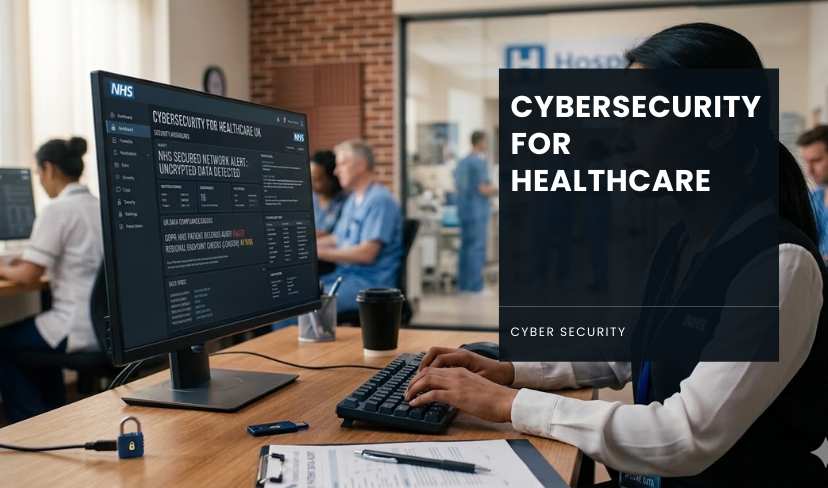
A hospital cannot pause operations because systems fail. A clinic cannot tell patients to wait because records are locked by ransomware. Yet this is exactly what is happening across the UK.
Healthcare cyber attacks are rising, and they are not small incidents. They shut down appointments, delay treatments, and expose patient data that must remain private.
If you lead operations, IT, or security inside a healthcare organisation, such an incident is not just an IT issue. It is a patient safety issue, a financial risk, and a reputational threat.
The NHS and private healthcare providers manage some of the most sensitive data in the country. Clinical records, medical histories, prescriptions, and diagnostic results form a valuable target for cyber criminals.
Strong cybersecurity for healthcare in the UK is no longer optional. It is a core part of running a safe and resilient healthcare organisation.
This article explains what healthcare cyberattacks look like, why healthcare data security is difficult to maintain, and how modern cybersecurity solutions for healthcare providers in the UK can protect operations and patient trust.
What Cybersecurity for Healthcare Actually Means?
Cybersecurity for healthcare refers to the systems, processes, and technologies used to protect patient data, medical devices, clinical systems, and hospital networks from cyber threats.
In practical terms, it means protecting three things:
- Patient data stored in electronic health records
- Clinical systems used by doctors, nurses, and administrative staff
- Medical devices and infrastructure connected to hospital networks
If any one of these fails, patient care is affected.
For example:
- A ransomware attack locks medical records before surgery
- A phishing email compromises a staff account
- An outdated medical device becomes an entry point into the network
Healthcare organisations have complex digital environments. They combine legacy infrastructure, cloud systems, remote workers, and connected medical devices. This complexity creates security gaps that attackers exploit.
That is why healthcare data security must be treated as an operational priority, not simply an IT task.
Why Are Healthcare Prime Targets for Cyber Attacks?
Healthcare data is extremely valuable. A single medical record can sell for far more on criminal markets than credit card data.
Why? Because it contains permanent identity information:
- NHS numbers
- Addresses
- Insurance details
- Medical history
- Prescription records
Unlike credit cards, this information cannot simply be cancelled. Cyber criminals know healthcare providers often operate under pressure. Systems must remain available at all times. This urgency makes organisations more likely to pay ransomware demands. This has led to a surge in healthcare cyber attacks across the UK and Europe. Some examples include:
- Ransomware attacks are shutting down hospital networks
- Data breaches exposing patient records
- Phishing attacks targeting NHS staff
- Exploited vulnerabilities in medical devices
According to UK government cybersecurity reports, the healthcare sector is among the most targeted industries. The financial impact goes beyond recovery costs. Organisations face:
- Regulatory fines
- Legal claims
- Operational downtime
- Loss of patient trust
Effective cybersecurity for healthcare providers in the UK is about preventing these outcomes before they happen.
Ready to Protect Your Patient Data?
Want a clear view of your current risk and a realistic roadmap to fix it? Speak with our healthcare cybersecurity specialists.
The Real Risk: Operational Disruption
Many leaders assume the worst-case scenario is a data breach. In reality, the bigger threat is operational disruption. Imagine this situation.
A ransomware attack spreads through a hospital network overnight. By morning:
- Electronic health records are inaccessible
- Appointment systems fail
- Diagnostic machines cannot connect to clinical systems
- Staff revert to paper processes
Suddenly, patient care slows dramatically. Appointments are cancelled. Treatments are delayed. Staff must work around manual processes. This is why healthcare data security and operational resilience are closely linked.
Cybersecurity protects more than information. It protects your ability to deliver care.
Common Cybersecurity Weak Points in Healthcare
Through years of working with healthcare organisations, we see the same issues appear again and again.
1. Legacy Systems
Many hospitals still rely on systems that are difficult to update. Older operating systems may lack security patches. Attackers actively search for these weaknesses.
2. Staff Phishing Attacks
Email remains the easiest way to enter a network. A single click on a malicious attachment can expose credentials and allow attackers to move across systems.
3. Unsecured Medical Devices
Medical devices such as imaging systems and monitoring equipment are often connected to hospital networks. Many were not designed with modern security controls.
4. Weak Access Control
If staff accounts have broad access to systems, a compromised account can cause major damage. Identity management is a key part of cybersecurity solutions for healthcare providers in the UK.
5. Lack of Continuous Monitoring
Many organisations discover breaches weeks or months after they occur. Early detection dramatically reduces the impact of cyber attacks.
How Healthcare Data Security Protects Patient Trust?
Healthcare depends on trust. Patients share personal medical information because they believe it will be handled responsibly. A data breach damages that trust immediately.
Consider the long-term effects:
- Patients hesitate to share sensitive details
- Organisations face regulatory scrutiny
- Media coverage harms reputation
In the UK, healthcare organisations must meet strict requirements under GDPR and NHS data protection standards. Strong cybersecurity for healthcare UK protects both compliance and public confidence.
What Modern Cybersecurity Solutions for Healthcare Providers UK Look Like?
If you want practical, outcome‑driven healthcare data security, it helps to think in three layers: prevent, detect, and recover.
1. Prevent: harden what attackers see
Focus on making it harder and less profitable to attack you.
- Modern identity and access management
Multi‑factor authentication for all remote access, granular role‑based access, and least‑privilege admin accounts reduces the chance that a single stolen password leads to a full breach. - Network and endpoint security
Modern firewalls, segmentation between clinical and administrative systems, and endpoint protection on devices are still your base layer. - Secure cloud and data hosting
When you move to the cloud, ensure UK data residency, clear data flow diagrams, and encryption at rest and in transit. For DaaS or virtual desktops, verify that suppliers meet DSPT and GDPR requirements. - Supplier security assurance
Build DSPT-style checks into procurement. Require evidence of compliance, incident reporting obligations, and clear data processing agreements from any provider that touches patient data.
Transputec designs and implements these preventative controls with healthcare‑specific patterns, including HIPAA‑aligned and NHS‑aligned configurations that are already tuned for clinical environments.
2. Detect: shorten the time from breach to response
Attackers will eventually get in. Your job is to stop them from turning an intrusion into a crisis.
- 24/7 security operations centre (SOC)
Always‑on monitoring, threat detection, and incident triage across your endpoints, servers, cloud, and network make the difference between minutes and weeks of dwell time. - Use of threat intelligence
Healthcare‑specific threat intelligence helps prioritise alerts that matter to you, such as ransomware variants currently targeting clinical systems. - Clear escalation routes
Clinicians and IT staff must know exactly how to report suspicious activity without worrying about blame or bureaucracy.
Transputec runs a 24/7 SOC with healthcare clients, integrating logs from clinical systems, remote access, and the cloud to catch attacks earlier and coordinate technical and business response.
3. Recover: plan for the bad day
Ransomware is as much a resilience problem as a security one. You should assume a scenario where key systems are encrypted, or a key supplier is offline.
You need:
- Tiered backup strategy with immutable, off‑line copies and tested restores for critical systems.
- Scenario‑based incident response plans, including total loss of a major site or third‑party service.
- Prioritised list of services to restore first, based on patient safety and operational impact.
Transputec helps providers design and test disaster recovery and business continuity plans tied directly to clinical priorities, not just IT metrics, so you can bring back what matters first.
Building a Cybersecurity Strategy for Healthcare
Healthcare organisations often ask where to start. A practical strategy focuses on five priorities.
1. Risk Assessment
Understand where patient data is stored and how it moves through systems.
2. Continuous Monitoring
Deploy monitoring tools that detect threats in real time.
3. Access Control
Implement identity security and multi-factor authentication.
4. Staff Awareness
Train employees to recognise phishing and suspicious activity.
5. Incident Response Planning
Prepare clear processes for responding to healthcare cyber attacks.
Working with experienced partners such as Transputec helps organisations implement these steps without overwhelming internal teams.
How Transputec Supports Cybersecurity for Healthcare Providers UK?
You are not looking for another generic managed service provider; you are looking for a partner that understands your regulatory context, your clinical pressures, and your budget constraints.
On the cybersecurity side, Transputec offers:
Managed cyber security services aligned to healthcare
Transputec delivers managed cybersecurity with HIPAA‑compliant systems and patient data security for healthcare, including UK providers. Our services cover advanced firewalls, endpoint protection, email security, and network segmentation tuned for clinical workflows.Healthcare‑aware SOC and incident response
Our SOC provides 24/7 monitoring, threat detection, and incident response under service levels that reflect the reality of healthcare operations. We help you contain attacks quickly and coordinate communications with stakeholders.Secure cloud migration and infrastructure modernisation
Transputec supports secure cloud migration, hybrid cloud design, and infrastructure modernisation that meet NHS and global healthcare compliance standards. That includes ensuring data residency, encryption, and access controls for patient records.Compliance and DSPT support
We work with your teams to design controls that satisfy GDPR, DSPT, and other healthcare frameworks, then provide evidence and reporting to support audit and renewal cycles.
The aim is to give you confidence that your cybersecurity for healthcare is handled proactively, so you can focus on service delivery and growth instead of firefighting.
Conclusion
Cybersecurity for healthcare is no longer a technical upgrade. It is a foundation for safe and reliable patient care. Healthcare organisations handle sensitive data, complex systems, and connected medical devices that make them prime targets for cyber criminals. Strong healthcare data security protects patient trust, ensures clinical systems remain available, and reduces the operational risk created by healthcare cyber attacks. With the right cybersecurity solutions for healthcare providers UK, organisations can protect patient information while maintaining efficient healthcare operations.
If you want to understand where your healthcare organisation may be vulnerable and how to improve resilience, speak with the cyber security specialists at Transputec.

Ready to Experience the Transputec Difference?
Contact us today to schedule a consultation with our experts.
FAQs
1. Why is cybersecurity for healthcare so important in the UK?
Healthcare organisations manage large volumes of sensitive patient data and operate critical clinical systems. A cyber attack can disrupt patient care, expose confidential records, and cause regulatory issues. Strong cybersecurity for healthcare UK protects both patient safety and operational continuity.
2. What are the most common healthcare cyber attacks?
Healthcare providers frequently face ransomware attacks, phishing campaigns, credential theft, and vulnerabilities in medical devices. These attacks often begin with compromised staff accounts or outdated systems that attackers exploit.
3. How can Transputec support healthcare organisations with cybersecurity?
Transputec delivers managed cyber security services designed for complex environments like healthcare. These include SOC monitoring, managed detection and response, vulnerability management, and security consulting that strengthen healthcare data security.
4. What cybersecurity solutions for healthcare providers UK are most effective?
The most effective approach combines several layers of protection. This includes continuous monitoring, strong identity security, vulnerability management, cloud security, and rapid incident response capabilities.
5. Can managed security services reduce the risk of healthcare cyber attacks?
Yes. Managed security services provide 24-hour monitoring, expert analysis, and rapid response capabilities that many organisations cannot build internally. Transputec helps healthcare providers detect threats early and prevent attacks from disrupting patient services.